
By Anne Vidalie – October 31, 2026
A painting by Camille Pissarro, hanging in the Metropolitan Museum of Art, is being claimed by the heirs of a Jewish businessman who was forced to sell it for a derisory amount in 1941 to ensure his family’s survival. But the New York museum refuses to return it.
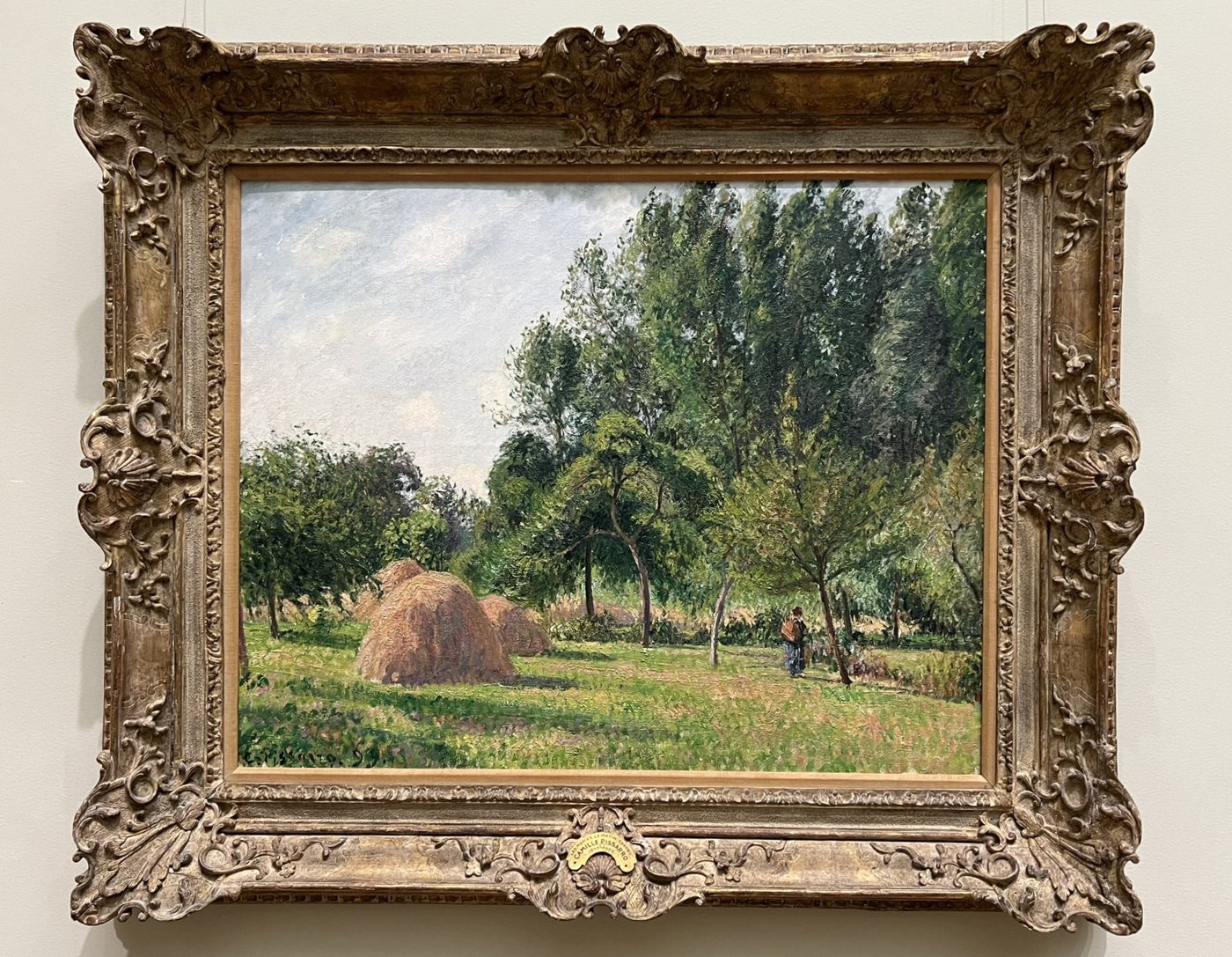
This painting by Camille Pissarro, depicting a gentle morning light bathing three haystacks planted beneath trees in a meadow in Éragny-sur-Epte, in the Oise department, is at the heart of a legal dispute that the Paris judicial court is preparing to settle. Painted in 1899, this bucolic scene, titled Haystacks, Morning, Éragny, belongs to the prestigious Metropolitan Museum of Art in New York (the Met), where visitors have been admiring it for twenty years. But should it be returned to the seven heirs of Max Braunthal, a Jewish businessman forced to sell it to a Parisian gallery in 1941 to ensure his family’s survival? A decisive hearing in the case will take place on November 10.
…The persecution of Max Julius Braunthal, born in 1878 in what was then Prussia, was twofold. As a German Jew, he had already fled his country. He was also a foreign Jew living in Vichy France. A successful businessman and art collector, he acquired works by painters such as Auguste Renoir, Camille Corot, Honoré Daumier and Max Liebermann…
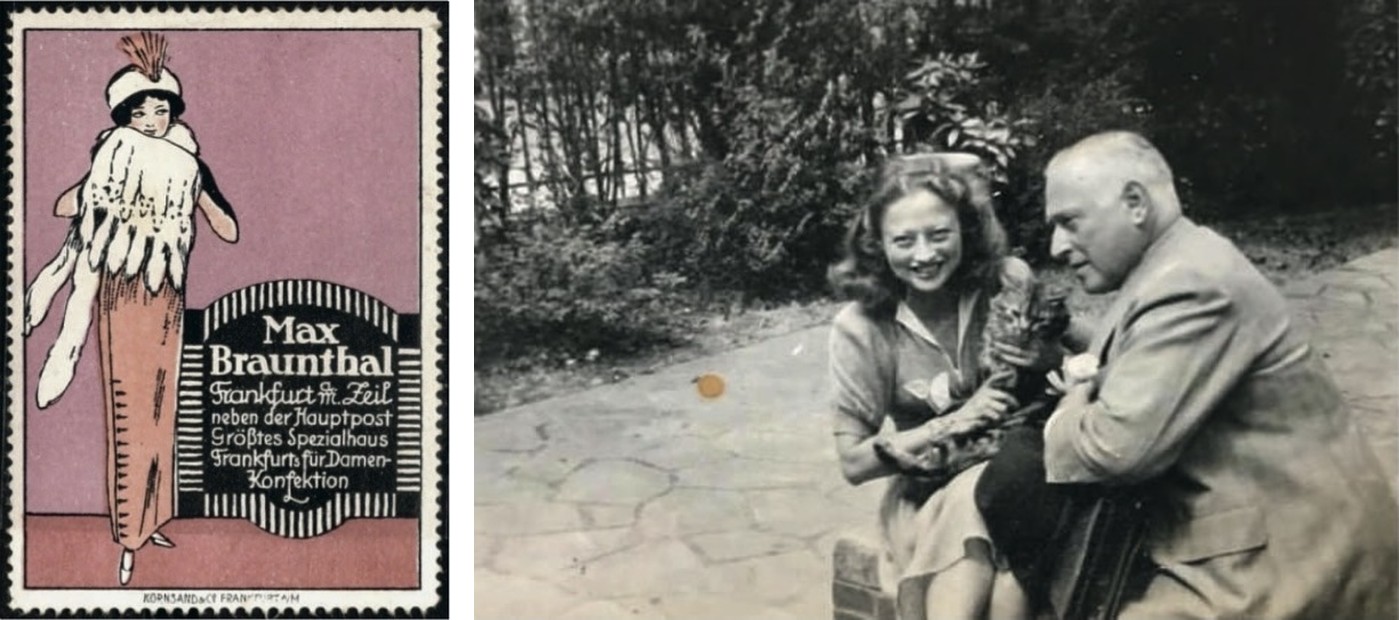
Survivor of the Vel’ d’Hiv roundup
A form of looting that went by another name. Following the outbreak of violence during Kristallnacht, on 9–10 November 1938, Hitler’s government made German Jews pay for the destruction. Max Braunthal was forced to pay nearly 270,000 Reichsmarks (equivalent to approximately €1.4 million today)…
“WHAT WE OBSERVED SEEMS TO REFLECT THE MET’S CONTEMPT FOR APPLICANTS”
James Palmer, Head of Mondex Corporation
In their new homeland, their fate was hardly any better. To survive, the couple put a collection of paintings up for auction at the Hôtel Drouot in Paris, first in May and then in June 1939. Three months later, war broke out, making them “enemy aliens”. Max Braunthal was interned at Les Milles camp, near Aix-en-Provence (Bouches-du-Rhône). He owed his release two months later to his son Erich’s enlistment in the French Foreign Legion.
This was only a brief respite. In June 1940, he was imprisoned at the camp in Audierne, Brittany (Finistère), as an “alien of Jewish race”. As the months went by, the antisemitic net tightened around them. In July 1940, a decree issued by Adolf Hitler ordered the seizure of all cultural property belonging to Jews and Freemasons in countries under German occupation…
…He urgently needed to sell off his art collection and book a one-way ticket to America. In December 1940, Lotte, the youngest of his children, boarded the ocean liner Serpa Pinto in Lisbon, bound for New York. But the sale of the paintings proves complicated. “An ordinance dated 15 July 1940, issued by the German Army Command in France, introduced a requirement, punishable under criminal law, to declare to the Kommandantur any work of art worth more than 100,000 francs (approximately €48,000 in today’s money), specifying the location of the property as well as the name and address of its owner,” explains Mélina Wolman, the lawyer representing the heirs.
Max Braunthal was trapped. He had little choice if he wanted to avoid attracting attention. On 17 February 1941, he sold his Pissarro to the Parisian Durand-Ruel gallery for 100,000 francs. Ten days later, Haystacks, Morning, Éragny was resold to Wolfgang Krüger, a German publisher, for 40% more…
In July 1942, Max and Charlotte became victims of the Vel’ d’Hiv roundup, along with more than 13,000 other Jews. Thanks to their connections, they managed to escape deportation, but they would never board the ship to the United States. Instead, they remained in hiding in a village in the Sarthe region until the end of the war…
But Max Braunthal had died two years earlier, and his widow, Charlotte, was never questioned. As for the Durand-Ruel gallery, it simply neglected to mention that the seller was Jewish. The painting, meanwhile, crossed the Atlantic…
A decade later, Max Braunthal’s descendants enlisted the help of James Palmer and his company, Mondex Corporation, to trace the scattered collection. This Canadian expert and his colleagues specialise in tracking down works of art extorted from Jewish families and returning them to their rightful heirs.
To find them, they scour exhibition and auction catalogues, specialist journals, art dealers’ archives, databases of looted property and specialist libraries around the world.
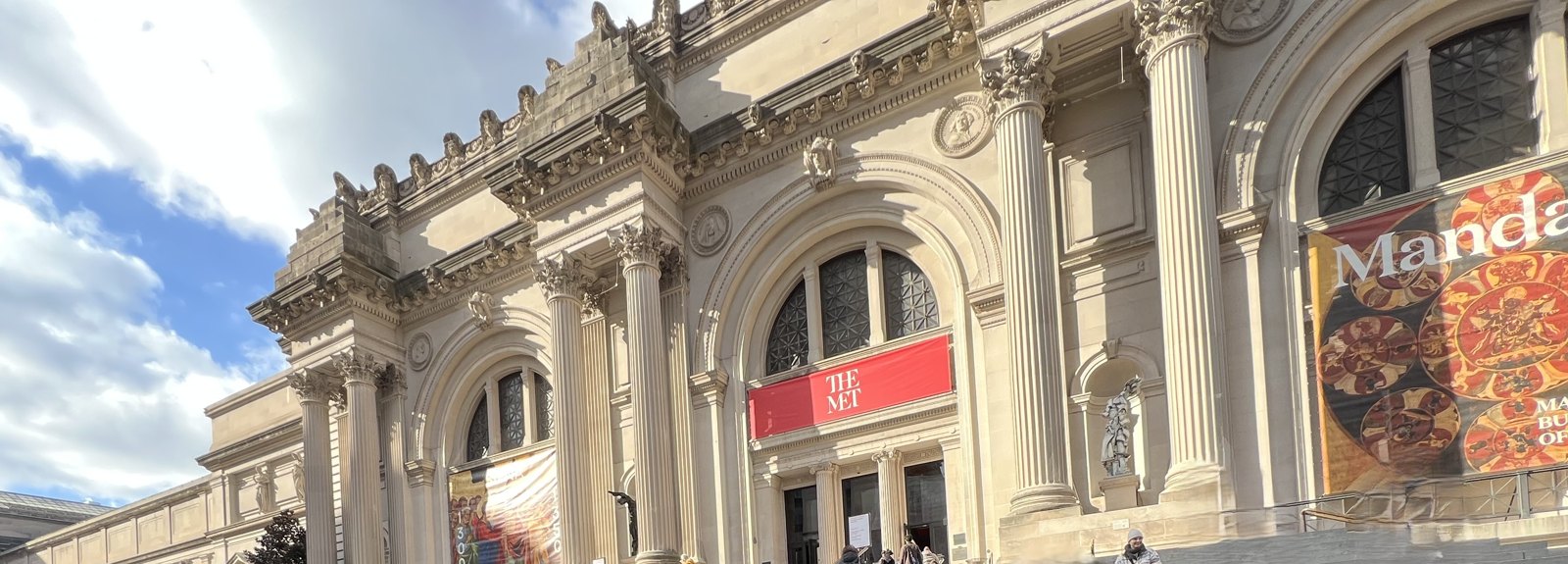
A museum caught between principles and reality
…In 2021, Max Braunthal’s heirs filed a restitution claim. They were fairly confident of a positive outcome. Was former museum director Philippe de Montebello not one of the architects of the Washington Principles, under which 44 countries pledged in 1998 to identify cultural property confiscated by the Nazis and trace its owners and their heirs?
And had the Met itself, through its collections management policy, not committed to “finding a prompt, fair, appropriate and mutually agreeable solution” to any restitution claim?
Yet the mediation attempt failed…
James Palmer, for his part, says he is “shocked by the Met’s behaviour, which is in flagrant contradiction with its official position”.
“What we have observed seems to reflect the museum’s contempt for claimants, as well as its lack of respect for their dignity, humanity and fundamental rights,” he says.
In January 2026, Max Braunthal’s heirs therefore decided to take their case to the Paris Judicial Court.
The court’s ruling, expected in the coming weeks, will be closely watched far beyond France…
This is an excerpt from this Le Parisien article. Full article through this link: Read the full article in Le Parisien